

Cornish Beef Pasties: Classic Savory Hand Pies Recipe
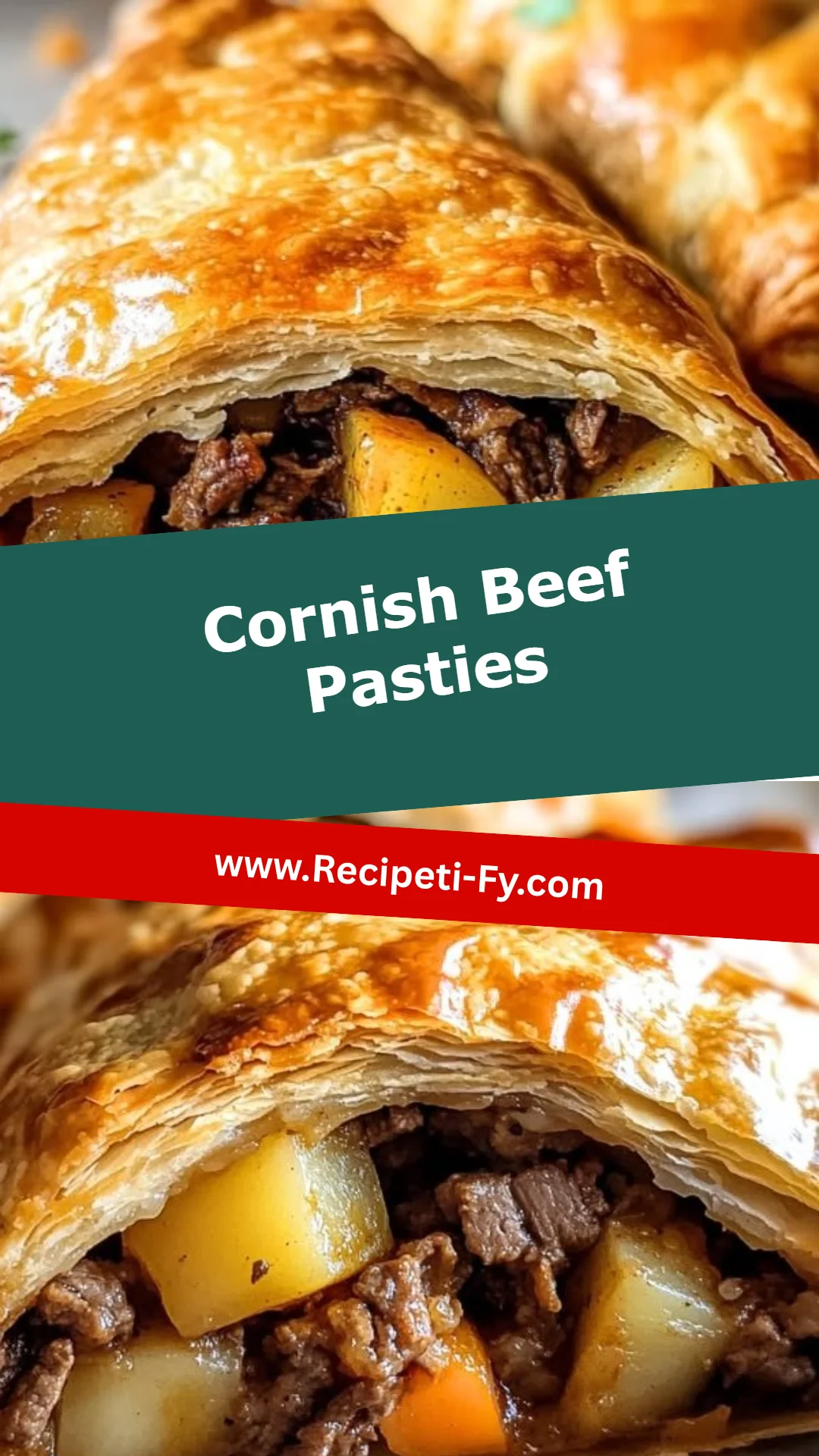
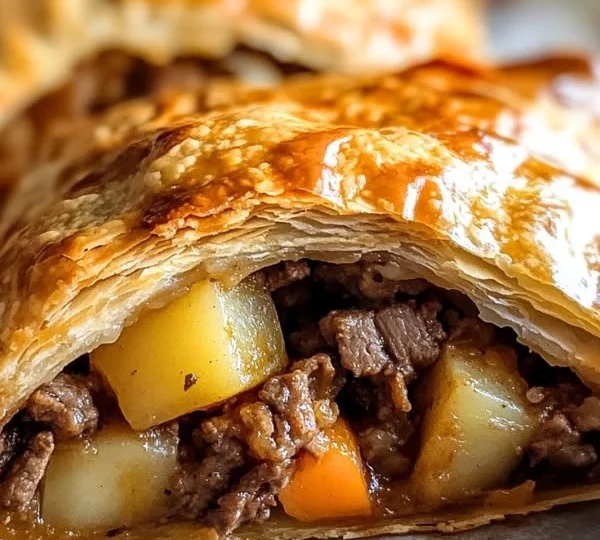
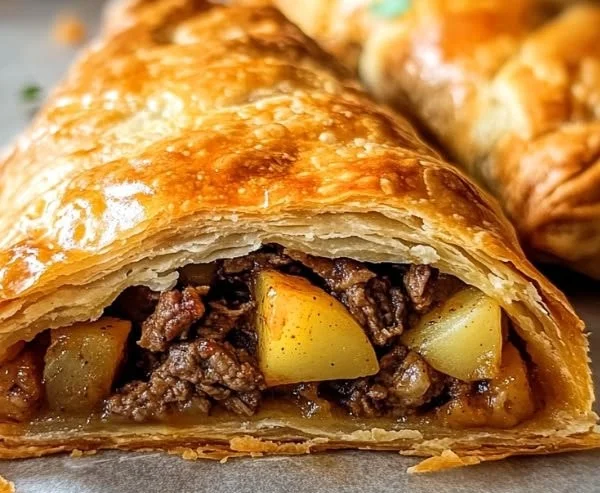
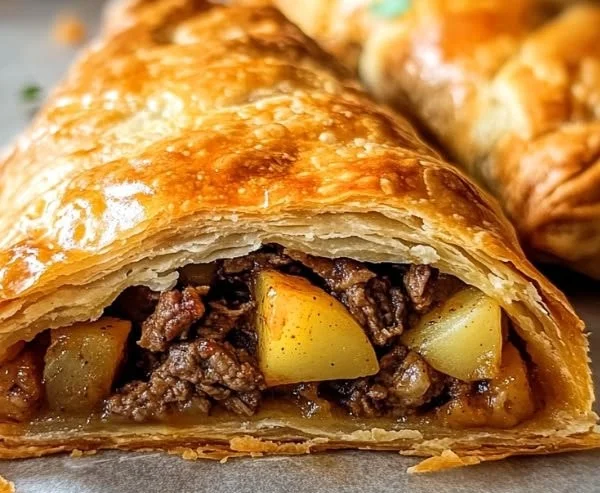
Cornish Beef Pasties are handheld savory pies filled with diced beef, potatoes, carrots, and onions wrapped in flaky pastry.
This traditional British comfort dish bakes quickly at home using simple ingredients and yields golden, portable meals perfect for lunches or dinners.
Follow this clear recipe to make four hearty pasties with rich, seasoned beef and tender vegetables enclosed in crisp crust.
| Prep Time | Cook Time | Total Time | Servings | Difficulty | Cuisine |
|---|---|---|---|---|---|
| 20 minutes | 30 minutes | 50 minutes | 4 pasties | Easy | British |
Why This Recipe Works
Cornish Beef Pasties work because a balanced ratio of meat to vegetables creates a flavorful, moist filling that stays tasty when baked.
I rely on diced beef and small vegetable pieces to ensure even cooking and a pleasant texture in every bite.
The Worcestershire sauce and salt provide savory backbone while a short sear develops deep caramelized notes in the filling.
I often use a light egg wash to encourage an evenly browned, glossy crust that keeps the pasty portable and appealing for lunches.
Ingredients
Cornish Beef Pasties require a short list of pantry staples and fresh vegetables to make a classic filling.
| Ingredient | Quantity | Notes |
|---|---|---|
| Beef, diced | 1 lb | Use chuck or round for flavor; substitute ground beef for faster prep |
| Potatoes, diced | 2 medium | Yukon Gold or russet; switch to sweet potato for sweeter profile |
| Onion, diced | 1 medium | Yellow onion for sweetness; shallot for subtlety |
| Carrots, diced | 2 medium | Cut small so vegetables cook through evenly |
| Salt | 1 teaspoon | Adjust to taste; reduce for low-sodium diets |
| Black pepper | 1/2 teaspoon | Freshly ground for best aroma |
| Worcestershire sauce | 1 tablespoon | Adds umami; soy sauce is a close substitute |
| Olive oil | 2 tablespoons | Use neutral oil if preferred for higher smoke point |
| Pie crusts or puff pastry | 2 crusts or sheets | Use store-bought or homemade; shortcrust yields sturdier shell |
| Egg, beaten (egg wash) | 1 | Brush for a golden sheen; use milk for a lighter finish |
Step-by-Step Instructions
This section gives concise, ordered steps to prepare Cornish Beef Pasties from start to finish.
Prepare the Filling
- Preheat the oven to 400°F (200°C).
- Heat two tablespoons of olive oil in a skillet over medium heat.
- Add the diced onions, carrots, and potatoes to the skillet and cook until softened.
- Add the diced beef, Worcestershire sauce, salt, and pepper and cook until the beef is browned.
Assemble the Pasties
- Roll out the pastry on a lightly floured surface and cut into circles sized for four pasties.
- Place a spoonful of filling in the center of each pastry circle.
- Fold the pastry over the filling and press the edges to seal, crimping as desired.
Bake and Serve
- Brush each sealed pasty with beaten egg to create an egg wash.
- Bake the pasties for 25 to 30 minutes until they turn golden brown.
- Serve warm, letting them rest for a few minutes before cutting or packing for lunch.
Chef Tips for Perfect Results
This list gives focused, actionable advice to improve texture and flavor when making Cornish Beef Pasties.
- Dice ingredients uniformly to ensure even cooking and a consistent mouthfeel in every bite.
- Pat the diced beef dry before searing to encourage better browning and concentrated savory flavor.
- Cool the filling slightly before assembling to prevent steam from softening the pastry and causing sogginess.
- Brush the pastry with egg wash just before baking to avoid flaking and to maximize an even golden crust.
- Chill assembled pasties for 10 minutes on a baking sheet if pastry feels warm, this tightens the dough for neater edges.
Common Mistakes to Avoid
This section identifies frequent errors and explains why they happen and how to correct them when making Cornish Beef Pasties.
Overcrowding the skillet: Overcrowded meat steams rather than browns, reducing flavor.
Fix by cooking the beef in a single layer or in batches to maintain high pan temperature and caramelization.
Cutting vegetables too large: Large pieces remain undercooked and create uneven texture in the filling.
Fix by dicing vegetables into small, uniform pieces so they finish cooking with the beef.
Sealing pastry improperly: Gaps allow filling juices to leak, causing burnt edges and soggy centers.
Fix by pressing edges firmly and crimping; use a little water to moisten edges if dough is dry.
Applying egg wash too early: Egg can drip into seams and prevent a proper seal, making a weak crust.
Fix by applying the egg wash right before baking rather than before assembling multiple pasties.
Baking at too low a temperature: Low heat produces pale, oily pastry and a longer cooking time.
Fix by preheating the oven to 400°F (200°C) and ensuring the rack is centered for even browning.
Variations and Substitutions
This table outlines simple ingredient swaps and explains how they will impact the final Cornish Beef Pasties.
| Ingredient | Substitution | Impact on Flavor |
|---|---|---|
| Beef, diced | Ground beef or lamb | Ground beef speeds prep but changes texture; lamb adds richness and a slightly gamey note. |
| Potatoes | Sweet potatoes or parsnips | Sweet potato adds sweetness; parsnip gives earthier, slightly peppery flavor. |
| Worcestershire sauce | Soy sauce or tamari | Soy provides umami with saltier profile; tamari preserves gluten-free option. |
| Pie crust | Puff pastry or shortcrust | Puff pastry yields flakier layers; shortcrust offers sturdier, slightly crumbly texture. |
| Olive oil | Vegetable oil or butter | Butter adds richness and a nuttier aroma; vegetable oil is neutral and has higher smoke point. |
Serving Suggestions and Pairings
Cornish Beef Pasties serve well with simple sides and pairings that complement the hearty filling.
Offer a crisp green salad with mustard vinaigrette, a bowl of steamed greens, or roasted root vegetables for balanced meals.
Pair pasties with a pint of British ale or a robust red wine for dinners, and pack one with a fruit and yogurt for portable lunches.
Internal resources like beef recipes, sturdy pastry guide, and lunch ideas can provide complementary techniques and menu inspiration.
Storage and Reheating
This table provides safe storage windows and clear reheating instructions to preserve flavor and texture for Cornish Beef Pasties.
| Method | Duration | Instructions |
|---|---|---|
| Refrigerator | 3 to 4 days | Cool completely, wrap individually, and store in an airtight container before chilling. |
| Freezer | Up to 3 months | Wrap tightly in foil and place in a freezer bag; thaw overnight in the refrigerator before reheating. |
| Oven Reheat | 5 to 15 minutes | Preheat oven to 350°F (175°C) and reheat on a baking sheet until warm throughout for best crust texture. |
| Microwave Reheat | 1 to 2 minutes | Use microwave for quick reheating, then crisp briefly in a hot oven or toaster oven to restore crust. |
Nutritional Information
Approximate values per serving give a basic nutritional snapshot for one Cornish Beef Pasty from this recipe.
| Nutrient | Amount per Serving (Approximate values) |
|---|---|
| Calories | 520 kcal |
| Protein | 28 g |
| Fat | 30 g |
| Carbohydrates | 38 g |
| Fiber | 3 g |
| Sodium | 700 mg |
Frequently Asked Questions
This FAQ answers common queries about substitutions, doneness, troubleshooting, make-ahead tips, and serving Cornish Beef Pasties.
Can I substitute ground beef for diced beef in Cornish beef pasties?
Yes, you can substitute ground beef for diced beef to simplify preparation and reduce cooking time.
Ground beef creates a softer, more uniform filling texture and may release more fat while cooking, requiring careful draining.
How do I know when the pasty filling is fully cooked?
Check doneness by ensuring beef is browned and vegetables are fork-tender before assembling the pasties.
Small dice speeds cooking and prevents underdone centers, and a brief test bite ensures the filling finish is satisfactory.
What should I do if the pastry becomes soggy after baking?
Soggy pastry usually results from excess filling moisture or underbaked crust; crisping in a hot oven fixes the issue.
Reheat at 375°F (190°C) for several minutes to evaporate excess moisture and restore a crisper shell without drying the filling.
Can I make Cornish Beef Pasties ahead of time and freeze them?
Yes, you can assemble and freeze pasties raw or bake them first and then freeze for convenient make-ahead meals.
Wrap each pasty tightly and thaw overnight in the refrigerator before baking or reheating to maintain texture and flavor.
What are good serving accompaniments for a Cornish Beef Pasty?
Serve pasties with a bright mustard vinaigrette salad, buttery peas, or roasted root vegetables for complementary textures.
A crisp lager or medium-bodied red wine pairs well, and offering chutney or brown sauce enhances savory notes.
Conclusion
Cornish Beef Pasties deliver a dependable, portable meal that highlights seasoned beef and tender vegetables wrapped in flaky pastry.
Follow the steps, respect the tips, and you will enjoy reliably golden pasties with deep savory flavor and satisfying texture.
For additional inspiration and authentic approaches, consult recipes such as Cornish Beef Pasties | 12 Tomatoes, explore traditional techniques at Authentic Cornish Pasty Recipe – The Daring Gourmet, or compare variations with Beef Pasty Recipe Inspired by Cornish Pasties – An Edible Mosaic™.
Cornish Beef Pasties
Ingredients
Method
- Preheat the oven to 400°F (200°C).
- Heat two tablespoons of olive oil in a skillet over medium heat.
- Add the diced onions, carrots, and potatoes to the skillet and cook until softened.
- Add the diced beef, Worcestershire sauce, salt, and pepper and cook until the beef is browned.
- Roll out the pastry on a lightly floured surface and cut into circles sized for four pasties.
- Place a spoonful of filling in the center of each pastry circle.
- Fold the pastry over the filling and press the edges to seal, crimping as desired.
- Brush each sealed pasty with beaten egg to create an egg wash.
- Bake the pasties for 25 to 30 minutes until they turn golden brown.
- Serve warm, letting them rest for a few minutes before cutting or packing for lunch.